

80 Geography Exam Questions and Answers for Recruiting Secondary School Teachers (Based on Rwanda’s Curriculum)
1. Geography Basics (15 Questions)
- Question: What is geography?
Answer: Geography is the study of the Earth’s physical features, atmosphere, and human activity as it relates to these, including population distribution, land use, and resource management. - Question: Name the two main branches of geography.
Answer: Physical geography and human geography. - Question: What are the five themes of geography?
Answer: Location, place, human-environment interaction, movement, and region. - Question: Define “latitude.”
Answer: Latitude refers to imaginary lines that run parallel to the equator and measure distances north or south of it in degrees. - Question: Name Rwanda’s coordinates.
Answer: Rwanda lies between 1°04’S and 2°51’S latitude, and 28°45’E and 30°53’E longitude. - Question: What is the difference between weather and climate?
Answer: Weather is the short-term atmospheric conditions, while climate refers to the average weather over a long period. - Question: Define “scale” in geography.
Answer: Scale is the ratio between a distance on a map and the corresponding distance on the ground. - Question: What is cartography?
Answer: Cartography is the science and art of map-making. - Question: Name the layers of the Earth.
Answer: Crust, mantle, outer core, and inner core. - Question: What is the primary function of GIS?
Answer: Geographic Information Systems (GIS) collect, analyze, and visualize spatial and geographical data. - Question: Explain the concept of “continental drift.”
Answer: Continental drift is the hypothesis that continents move slowly over Earth’s surface over geological time. - Question: What is the significance of the Great Rift Valley in Africa?
Answer: It is a geological depression caused by tectonic activity and is important for understanding plate movements and the region’s unique ecosystems. - Question: Define “demography.”
Answer: Demography is the statistical study of populations, including their structure, distribution, and trends. - Question: What is an ecosystem?
Answer: An ecosystem is a community of interacting organisms and their physical environment. - Question: Differentiate between absolute and relative location.
Answer: Absolute location is the exact coordinates (latitude and longitude), while relative location describes a place based on its surroundings.

2. Rwanda-Specific Geography (20 Questions)
- Question: What are Rwanda’s main physical regions?
Answer: Eastern plateau, central plateau, and highlands. - Question: Name Rwanda’s main rivers.
Answer: Nyabarongo, Akagera, and Ruzizi. - Question: What is Rwanda’s largest lake?
Answer: Lake Kivu. - Question: What is the average altitude of Rwanda?
Answer: Approximately 1,500 meters above sea level. - Question: Define “Umukenke.”
Answer: It refers to the grassland region in Rwanda, known for grazing cattle. - Question: What type of climate does Rwanda have?
Answer: A tropical highland climate with moderate temperatures. - Question: What is the importance of the Akagera National Park?
Answer: It is vital for biodiversity conservation, tourism, and economic development. - Question: Identify Rwanda’s neighboring countries.
Answer: Uganda (north), Tanzania (east), Burundi (south), and DRC (west). - Question: What are the main agricultural products of Rwanda?
Answer: Coffee, tea, bananas, beans, and potatoes. - Question: What are the environmental challenges facing Rwanda?
Answer: Deforestation, soil erosion, and overpopulation. - Question: What is the significance of Lake Kivu?
Answer: It provides fishing, tourism, and methane gas extraction opportunities. - Question: What are Rwanda’s major economic activities?
Answer: Agriculture, tourism, and mining. - Question: What is the role of Gishwati-Mukura National Park?
Answer: It conserves biodiversity and mitigates climate change through reforestation. - Question: What is Rwanda’s population density?
Answer: It is one of the highest in Africa, averaging about 525 people per square kilometer. - Question: Why is Nyungwe Forest important?
Answer: It is a biodiversity hotspot and a crucial water catchment area.
3. Geographical Skills (10 Questions)
- Question: How do you calculate the scale of a map?
Answer: Divide the distance on the map by the corresponding ground distance. - Question: What are contour lines?
Answer: Lines on a map connecting points of equal elevation. - Question: How is population density calculated?
Answer: Divide the total population by the total land area. - Question: Name two types of thematic maps.
Answer: Climatic maps and population maps. - Question: How is longitude used to determine time zones?
Answer: Every 15° of longitude represents a difference of one hour.
4. Environmental Geography (20 Questions)
- Question: What is environmental degradation?
Answer: It is the deterioration of the environment through the depletion of resources, destruction of ecosystems, and pollution. - Question: Name three types of renewable energy sources.
Answer: Solar energy, wind energy, and hydropower. - Question: What are the main causes of deforestation in Rwanda?
Answer: Agricultural expansion, charcoal production, and population pressure. - Question: Define “biodiversity.”
Answer: Biodiversity is the variety of life forms in a particular ecosystem or the entire Earth. - Question: What is desertification?
Answer: It is the process by which fertile land becomes desert due to drought, deforestation, or unsustainable practices. - Question: How does afforestation help combat climate change?
Answer: Trees absorb carbon dioxide, reduce the greenhouse effect, and improve biodiversity. - Question: Name three consequences of global warming.
Answer: Rising sea levels, more extreme weather events, and loss of biodiversity. - Question: What is the Kyoto Protocol?
Answer: An international treaty aimed at reducing greenhouse gas emissions. - Question: Define “urbanization.”
Answer: The process by which an increasing percentage of a population lives in cities and urban areas. - Question: How does soil erosion affect agriculture?
Answer: It reduces soil fertility, leading to lower crop yields. - Question: What is the importance of wetlands in Rwanda?
Answer: Wetlands help regulate water flow, prevent flooding, and support biodiversity. - Question: What is sustainable development?
Answer: Development that meets current needs without compromising future generations’ ability to meet theirs. - Question: How does overpopulation affect natural resources?
Answer: It increases resource consumption, leading to depletion and environmental stress. - Question: What is an ecological footprint?
Answer: It measures the human demand on Earth’s ecosystems and natural resources. - Question: What are the primary sources of water pollution in Rwanda?
Answer: Agricultural runoff, industrial discharge, and poor waste management. - Question: What is “e-waste”?
Answer: Discarded electronic devices and equipment. - Question: How can communities promote waste management?
Answer: By practicing recycling, composting, and proper disposal of hazardous materials. - Question: Define “climate resilience.”
Answer: The ability to anticipate, prepare for, and respond to climate-related impacts. - Question: Name three benefits of environmental conservation.
Answer: Protecting biodiversity, improving air and water quality, and ensuring sustainable resource use.
5. Teaching Methodologies and Assessment in Geography (15 Questions)
- Question: What is learner-centered teaching?
Answer: A teaching approach that focuses on the active participation and engagement of students in their learning process. - Question: Name three methods of teaching geography.
Answer: Fieldwork, map analysis, and case studies. - Question: Why is fieldwork important in geography?
Answer: It provides hands-on experience and helps learners understand geographical concepts in real-world settings. - Question: What are formative assessments?
Answer: Assessments conducted during the learning process to monitor progress and provide feedback. - Question: What is the role of group work in teaching geography?
Answer: It promotes collaboration, critical thinking, and the sharing of diverse perspectives. - Question: How can technology enhance the teaching of geography?
Answer: Through tools like GIS, interactive maps, and educational videos to improve visualization and engagement. - Question: What are summative assessments?
Answer: Tests or evaluations conducted at the end of a unit or course to measure overall understanding. - Question: How can role-playing be used in geography lessons?
Answer: Students can simulate scenarios like urban planning or environmental debates to deepen understanding. - Question: Name two advantages of using maps in geography lessons.
Answer: Maps enhance spatial awareness and help visualize geographical data. - Question: What is a case study, and how is it used in geography?
Answer: A detailed analysis of a particular event, location, or phenomenon to provide real-world context. - Question: What is the role of questioning in geography teaching?
Answer: To stimulate critical thinking and ensure active participation. - Question: How do you integrate cross-curricular learning in geography?
Answer: By connecting geography to subjects like history, science, and economics. - Question: What is differentiated instruction?
Answer: Tailoring teaching methods to meet the diverse needs of students. - Question: How do visual aids improve learning in geography?
Answer: They make complex concepts easier to understand and retain. - Question: Name one way to assess map-reading skills.
Answer: Asking students to interpret symbols, scales, and directions on a map.
6. Advanced Geography Concepts (10 Questions)
- Question: What is geomorphology?
Answer: The study of landforms and the processes that shape them. - Question: Explain the water cycle.
Answer: The continuous movement of water through evaporation, condensation, precipitation, and collection. - Question: What are isobars?
Answer: Lines on a map that connect points of equal atmospheric pressure. - Question: Define “plate tectonics.”
Answer: The theory that Earth’s crust is divided into plates that move over the mantle. - Question: What causes ocean currents?
Answer: Wind, Earth’s rotation, salinity, and temperature differences. - Question: What is population migration?
Answer: The movement of people from one place to another for economic, social, or political reasons. - Question: Define “urban sprawl.”
Answer: The uncontrolled expansion of urban areas into rural land. - Question: What is agroforestry?
Answer: A land-use system combining agriculture and forestry practices. - Question: Name three indicators of development.
Answer: GDP, literacy rate, and life expectancy. - Question: Explain “sustainable agriculture.”
Answer: Farming practices that preserve environmental health while ensuring food security.
7. Practical Application (5 Questions)
- Question: Design a lesson plan to teach the concept of deforestation.
Answer: A lesson plan would include objectives, teaching methods (like group discussions and case studies), resources (videos, maps), and assessment through class participation and quizzes.
Here are additional questions and answers to expand the exam, maintaining alignment with the Rwandan curriculum and covering more geography topics.
8. Physical Geography (15 Questions)
- Question: What is the hydrological cycle?
Answer: The hydrological cycle, or water cycle, is the process of water movement through evaporation, condensation, precipitation, infiltration, and runoff. - Question: Name the three types of rocks.
Answer: Igneous rocks, sedimentary rocks, and metamorphic rocks. - Question: What are the main causes of earthquakes?
Answer: Tectonic plate movements, volcanic activity, and human activities like mining. - Question: What is weathering?
Answer: Weathering is the breakdown of rocks and minerals at or near Earth’s surface through physical, chemical, or biological processes. - Question: Define “erosion.”
Answer: Erosion is the removal and transportation of soil and rock by natural agents like water, wind, and ice. - Question: What are ocean currents, and why are they important?
Answer: Ocean currents are large-scale movements of water in the ocean, important for regulating climate and distributing nutrients. - Question: What is a volcano?
Answer: A volcano is an opening in Earth’s crust where molten rock, ash, and gases are ejected. - Question: Explain the difference between magma and lava.
Answer: Magma is molten rock beneath Earth’s surface; lava is molten rock that reaches the surface. - Question: What is a watershed?
Answer: A watershed is an area of land where all precipitation drains into a common outlet, such as a river or lake. - Question: Define “continental shelf.”
Answer: A continental shelf is the submerged part of a continent extending into the ocean. - Question: What is a delta?
Answer: A delta is a landform at a river’s mouth, formed by deposition of sediment carried by the river. - Question: Name three examples of renewable natural resources.
Answer: Solar energy, wind energy, and water. - Question: What is permafrost?
Answer: Permafrost is soil that remains frozen for at least two consecutive years, typically found in polar regions. - Question: What are tectonic plates?
Answer: Tectonic plates are large sections of Earth’s lithosphere that move over the asthenosphere. - Question: What is the significance of the equator?
Answer: The equator is the imaginary line that divides Earth into the Northern and Southern Hemispheres and is the reference point for latitude.
9. Human Geography (15 Questions)
- Question: Define “urbanization.”
Answer: Urbanization is the increase in the percentage of a population living in urban areas. - Question: What is a population pyramid?
Answer: A population pyramid is a graphical representation of the age and sex distribution of a population. - Question: Explain the term “push factors” in migration.
Answer: Push factors are conditions that drive people to leave their place of origin, such as poverty or conflict. - Question: What are “pull factors”?
Answer: Pull factors are conditions that attract people to a new location, such as job opportunities or safety. - Question: Define “economic geography.”
Answer: Economic geography studies the location, distribution, and spatial organization of economic activities. - Question: What is cultural diffusion?
Answer: Cultural diffusion is the spread of cultural elements, such as beliefs, practices, and technologies, from one region to another. - Question: What is globalization?
Answer: Globalization is the increasing interconnectedness of the world through trade, technology, culture, and communication. - Question: How does population density affect resource use?
Answer: Higher population density increases pressure on resources, potentially leading to scarcity and environmental degradation. - Question: Define “subsistence farming.”
Answer: Subsistence farming is agricultural production aimed at meeting the needs of the farmer’s family, with little surplus for trade. - Question: What is the difference between rural and urban settlements?
Answer: Rural settlements are characterized by small populations and agriculture-based economies, while urban settlements are larger and focus on diverse economic activities. - Question: What is urban sprawl?
Answer: Urban sprawl refers to the uncontrolled expansion of urban areas into surrounding rural land. - Question: Define “sustainable development.”
Answer: Sustainable development is development that meets present needs without compromising the ability of future generations to meet theirs. - Question: What is the demographic transition model?
Answer: It is a model showing the changes in birth and death rates as a country develops economically. - Question: How does trade influence cultural exchange?
Answer: Trade facilitates the exchange of goods, ideas, and cultural practices between regions. - Question: Explain “carrying capacity.”
Answer: Carrying capacity is the maximum population size an environment can sustainably support.
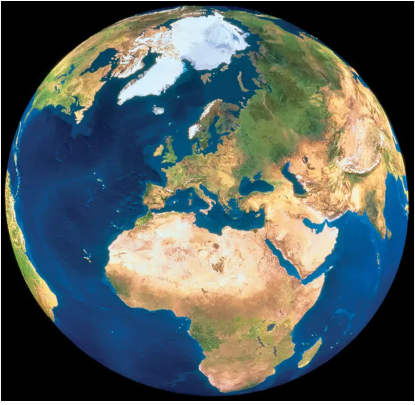
10. Regional Geography (10 Questions)
- Question: What is the significance of the Nile River for Africa?
Answer: The Nile provides water for irrigation, hydroelectric power, and supports livelihoods in the region. - Question: Name three major deserts in Africa.
Answer: The Sahara Desert, Kalahari Desert, and Namib Desert. - Question: What is the largest rainforest in the world?
Answer: The Amazon Rainforest. - Question: What are the major climatic zones in Africa?
Answer: Tropical rainforest, savanna, desert, and Mediterranean. - Question: Name three landlocked countries in Africa.
Answer: Rwanda, Uganda, and Zambia. - Question: What is the Great Rift Valley?
Answer: It is a continuous geographical trench running through Eastern Africa, formed by tectonic plate movements. - Question: What is the Sahel?
Answer: The Sahel is a semi-arid region in Africa between the Sahara Desert and the savanna, prone to desertification. - Question: What is the primary export of East African countries?
Answer: Agricultural products, such as coffee, tea, and flowers. - Question: What natural resources are found in the Democratic Republic of Congo?
Answer: Minerals such as cobalt, gold, diamonds, and copper. - Question: How does Lake Victoria influence the region’s economy?
Answer: It supports fishing, agriculture, transportation, and tourism.