


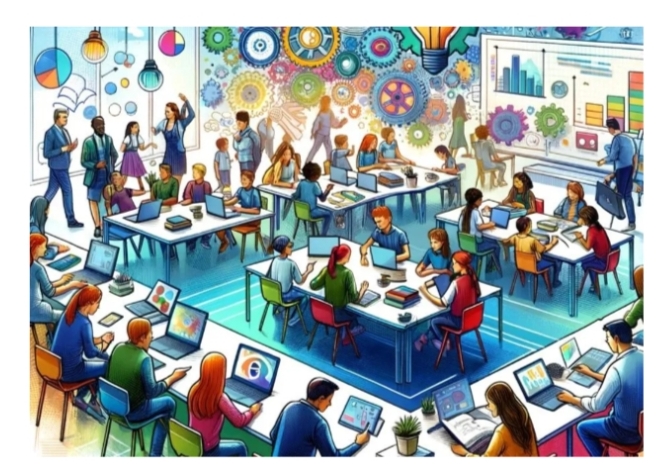
Uburyo n’ubuhanga bwo kwigisha abanyeshuri mu buryo bwabo (active teaching methods and techniques) bikoreshwa mu kwigisha abanyeshuri mu buryo bubasaba kugira uruhare rugaragara, aho kuba abumva gusa inyigisho. Dore bumwe mu buryo bukoreshwa cyane:
1. **Kwiga mu matsinda (Collaborative Learning)**: Abanyeshuri bakora hamwe mu matsinda kugira ngo bakemure ibibazo, basoze imishinga cyangwa baganire ku nsanganyamatsiko. Tekiniki zirimo *think-pair-share*, imishinga y’itsinda, no kwigishanya aho abanyeshuri basobanurira bagenzi babo ibitekerezo.
2. **Kwiga gushingiye ku kibazo (Problem-Based Learning – PBL)**: Abanyeshuri biga bakemura ibibazo byo mu buzima busanzwe, bibafasha kwiyungura ubumenyi bwo gutekereza ku kibazo, gukora ubushakashatsi, no gukemura ibibazo. Bakora mu matsinda kugira ngo bashakishe ibisubizo, bikabafasha gusobanukirwa neza amasomo.
3. **Kwiga hifashishijwe inkuru zifatika (Case-Based Learning)**: Abanyeshuri bisesengura ibyabaye cyangwa ibitekerezo by’ibintu bibaho, bibafasha gushyira mu bikorwa ubumenyi bwa tewori ku buryo bw’imikorere. Bukunda gukoreshwa mu masomo y’ubuvuzi, amategeko, n’ubucuruzi.
4. **Kwiga hifashishijwe ubushakashatsi (Inquiry-Based Learning)**: Abanyeshuri bashishikarizwa kubaza ibibazo, gukora ubushakashatsi, no gusuzuma insanganyamatsiko mu buryo burambuye. Abarimu babayobora mu buryo bw’ubushakashatsi, bikabatera amatsiko no kwiyigira ubwabo.
5. **Gukinira mu myanya y’abandi (Role-Playing) no Kwiyumvamo ibyo abandi bakora (Simulations)**: Abanyeshuri bafata imyanya bagakina inkuru kugira ngo basobanukirwe uko abandi babona ibintu. Ibi bishobora kwifashishwa mu gusobanura amateka, imibereho, cyangwa ubumenyi bw’ibinyabuzima, bikabafasha kwiyumva mu mwanya w’abandi no gukunda ibyo biga.
6. **Icyumba cy’imyitozo (Flipped Classroom)**: Abanyeshuri biga iby’ibanze bari mu rugo bifashishije amashusho cyangwa amasomo, hanyuma mu ishuri bakagirana ibiganiro, imyitozo, n’ibikorwa bifatika. Ibi bituma imyigire iba nterambirire kandi irimo ibikorwa mu ishuri.
7. **Ibiganiro bya Socrate (Socratic Seminar)**: Ni uburyo bw’ibiganiro aho abanyeshuri babaza bakanasubiza ibibazo bigamije guteza imbere gutekereza kwimbitse no gusuzuma ibitekerezo bihishe inyuma. Bishishikariza abanyeshuri gutekereza ku buryo bwimbitse no gusobanura ibitekerezo byabo.
8. **Uburyo bwa Jigsaw**: Ni uburyo bwo gufatanya aho buri munyeshuri aba umwigisha kuri kimwe mu byigishwa maze akigisha itsinda rye. Ubu buryo bushishikariza gukorana, gukorera hamwe, no gusobanukirwa neza amasomo.
9. **Kwiga hakoreshejwe ubunararibonye (Experiential Learning)**: Kwiga binyuze mu bikorwa, nko gusura ahantu, gukora igerageza muri laboratwari, no gukora imenyerezamwuga, bituma abanyeshuri bashyira mu bikorwa ubumenyi bwo mu ishuri mu buzima busanzwe.
10. **Kwiga binyuze mu mikino (Game-Based Learning)**: Gukoresha imikino, yaba iy’ikoranabuhanga cyangwa isanzwe, mu kwigisha ibitekerezo cyangwa ubumenyi runaka. Imikino ituma abanyeshuri bakunda kwiga kandi ibafasha kumva amasomo akomeye mu buryo burambuye kandi bushimishije.
11. **Impaka n’ibiganiro (Debates and Discussions)**: Impaka zigize amategeko cyangwa ibiganiro bigufasha abanyeshuri kuvuga ibitekerezo byabo, gutabara ibitekerezo byabo, no kwitegereza imyanya itandukanye.
12. **Gukoresha imirongo y’ibitekerezo no gutekereza (Mind Mapping and Brainstorming)**: Tekiniki zifasha abanyeshuri gutegura ibitekerezo, gukora amwe mu masano, no kwerekana ibitekerezo. Ni ngirakamaro cyane mu masomo ajyanye n’ubugeni no mu gihe cyo kwigisha insanganyamatsiko nshya.
13. **Amahugurwa n’ibikorwa byo mu ntoki (Workshops and Hands-On Activities)**: Bituma abanyeshuri bakora mu buryo bw’ibikorwa bagakora imyitozo yihariye, nk’amahugurwa yo kwandika, igerageza rya siyansi, cyangwa imyitozo mu masomo ya tekinike.
14. **Gusesengurana no gutanga ibitekerezo hagati y’abanyeshuri (Peer Review and Feedback)**: Abanyeshuri basesengura imirimo ya bagenzi babo bakatanga ibitekerezo byubaka. Ubu buryo butuma biyungura ubumenyi no gutekereza ku buryo bwimbitse, kuko bareba bakaniga ku by’abandi.
15. **Gukoresha ibikoresho by’ikoranabuhanga (Use of Technology Tools)**: Gukoresha ibikoresho by’ikoranabuhanga nka porogaramu zifasha mu kwiga, laboratwari z’ikoranabuhanga, n’ahantu ho gukorera kuri mudasobwa bishobora gutuma imyigire iba nziza kandi iboneye.
Izi nzira zose zituma imyigire iba ikorera mu ishuri kandi irimo ibikorwa, bigatuma abanyeshuri bagira uruhare ndetse bagakora ku buryo burenze ku bumenyi bwa mu ishuri, nko gukorana n’abandi, gutekereza ku buryo bwimbitse no gutanga ibitekerezo byubaka.
Active teaching methods and techniques engage students in the learning process through activities that require them to participate actively, rather than passively receiving information. Here are some commonly used active teaching methods and techniques:
1. **Collaborative Learning**: Students work together in groups to solve problems, complete tasks, or discuss topics. Techniques include *think-pair-share*, group projects, and peer teaching, where students explain concepts to each other.
2. **Problem-Based Learning (PBL)**: Students learn by solving real-world problems, which develops critical thinking, research, and problem-solving skills. They work in teams to identify solutions, which helps to understand concepts deeply.
3. **Case-Based Learning**: Students analyze real-life or simulated cases related to the subject, allowing them to apply theoretical knowledge to practical situations. It is commonly used in medical, law, and business studies.
4. **Inquiry-Based Learning**: Students are encouraged to ask questions, research, and explore topics in depth. Teachers guide them through a process of inquiry, promoting curiosity, and independent learning.
5. **Role-Playing and Simulations**: Students take on roles and act out scenarios to understand different perspectives. This can be used to explore historical events, social situations, or scientific concepts, fostering empathy and engagement.
6. **Flipped Classroom**: Students learn new content at home through videos or readings and then engage in discussions, exercises, and practical applications in the classroom. This allows for more interactive, hands-on learning during class time.
7. **Socratic Seminar**: A form of discussion where students ask and answer questions to stimulate critical thinking and explore underlying assumptions. It encourages students to think deeply and articulate their ideas clearly.
8. **Jigsaw Method**: A collaborative technique where each student becomes an “expert” on a piece of the topic and then teaches it to their group. This method promotes accountability, collaboration, and comprehensive understanding.
9. **Experiential Learning**: Learning through experience, such as field trips, lab experiments, and internships, allowing students to apply classroom knowledge to real-world contexts.
10. **Game-Based Learning**: Using games, either digital or physical, to teach concepts or skills. Games encourage engagement and can make complex topics more accessible and enjoyable.
11. **Debates and Discussions**: Structured debates or open discussions allow students to articulate their viewpoints, defend their ideas, and critically evaluate different perspectives.
12. **Mind Mapping and Brainstorming**: Techniques that help students organize their thoughts, make connections, and generate ideas. It’s particularly effective in creative subjects and when introducing new topics.
13. **Workshops and Hands-On Activities**: Involve students in activities that let them practice skills in a real or simulated environment, such as writing workshops, science experiments, or practical exercises in technical subjects.
14. **Peer Review and Feedback**: Students review each other’s work, providing constructive feedback. This method enhances understanding and critical thinking, as they evaluate and learn from others’ perspectives.
15. **Use of Technology Tools**: Integrating tools like interactive apps, virtual labs, and digital collaboration platforms can make learning more interactive and accessible.
These methods help make learning dynamic, encourage participation, and allow students to develop a variety of skills beyond academic knowledge, such as teamwork, critical thinking, and communication.
Les méthodes et techniques d’enseignement actif impliquent les élèves dans le processus d’apprentissage à travers des activités qui les poussent à participer activement plutôt qu’à recevoir l’information de manière passive. Voici quelques-unes des méthodes et techniques d’enseignement actif les plus couramment utilisées :
1. **Apprentissage collaboratif** : Les élèves travaillent ensemble en groupes pour résoudre des problèmes, accomplir des tâches ou discuter de sujets. Les techniques incluent *think-pair-share* (réfléchir en binôme), les projets de groupe et l’enseignement entre pairs, où les élèves expliquent les concepts les uns aux autres.
2. **Apprentissage basé sur les problèmes (PBL)** : Les élèves apprennent en résolvant des problèmes du monde réel, ce qui développe des compétences en réflexion critique, en recherche et en résolution de problèmes. Ils travaillent en équipe pour identifier des solutions, ce qui les aide à comprendre les concepts en profondeur.
3. **Apprentissage basé sur les cas (Case-Based Learning)** : Les élèves analysent des cas réels ou simulés liés au sujet, leur permettant d’appliquer les connaissances théoriques à des situations pratiques. Cette méthode est couramment utilisée en médecine, en droit et en gestion.
4. **Apprentissage basé sur l’enquête (Inquiry-Based Learning)** : Les élèves sont encouragés à poser des questions, à faire des recherches et à explorer des sujets en profondeur. Les enseignants les guident dans un processus d’enquête, favorisant la curiosité et l’apprentissage autonome.
5. **Jeux de rôle et simulations** : Les élèves assument des rôles et rejouent des scénarios pour comprendre différentes perspectives. Cette méthode peut être utilisée pour explorer des événements historiques, des situations sociales ou des concepts scientifiques, développant ainsi l’empathie et l’engagement.
6. **Classe inversée (Flipped Classroom)** : Les élèves apprennent de nouveaux contenus à la maison, souvent via des vidéos ou des lectures, et participent en classe à des discussions, des exercices et des applications pratiques. Cela permet un apprentissage interactif et pratique pendant le temps en classe.
7. **Séminaire socratique** : Une forme de discussion où les élèves posent et répondent à des questions pour stimuler la pensée critique et explorer les hypothèses sous-jacentes. Cela encourage les élèves à réfléchir profondément et à exprimer clairement leurs idées.
8. **Méthode Jigsaw** : Une technique collaborative où chaque élève devient un “expert” sur une partie du sujet et l’enseigne ensuite à son groupe. Cette méthode favorise la responsabilité, la collaboration et une compréhension complète.
9. **Apprentissage expérientiel** : Apprentissage par l’expérience, comme les sorties scolaires, les expériences en laboratoire et les stages, permettant aux élèves d’appliquer les connaissances acquises en classe dans des contextes réels.
10. **Apprentissage basé sur les jeux** : Utiliser des jeux, numériques ou physiques, pour enseigner des concepts ou des compétences. Les jeux encouragent l’engagement et peuvent rendre les sujets complexes plus accessibles et agréables.
11. **Débats et discussions** : Les débats structurés ou les discussions ouvertes permettent aux élèves d’articuler leurs points de vue, de défendre leurs idées et d’évaluer de manière critique différentes perspectives.
12. **Cartes heuristiques et brainstorming** : Techniques qui aident les élèves à organiser leurs pensées, à faire des connexions et à générer des idées. C’est particulièrement efficace dans les matières créatives et lors de l’introduction de nouveaux sujets.
13. **Ateliers et activités pratiques** : Impliquent les élèves dans des activités qui leur permettent de pratiquer des compétences dans un environnement réel ou simulé, comme les ateliers d’écriture, les expériences scientifiques ou les exercices dans des matières techniques.
14. **Révision par les pairs et retour d’information** : Les élèves révisent le travail de leurs pairs et fournissent des commentaires constructifs. Cette méthode améliore la compréhension et la pensée critique, car ils évaluent et apprennent des perspectives des autres.
15. **Utilisation des outils technologiques** : L’intégration d’outils comme les applications interactives, les laboratoires virtuels et les plateformes de collaboration numérique peut rendre l’apprentissage plus interactif et accessible.
Ces méthodes rendent l’apprentissage dynamique, encouragent la participation et permettent aux élèves de développer une variété de compétences au-delà des connaissances académiques, telles que le travail en équipe, la pensée critique et la communication.