


1. Who is a Slow Learner?
A slow learner is a student who takes longer than average to grasp new concepts and skills. However, they do not have intellectual disabilities but require additional time, practice, and support to understand academic material. They often face challenges in comprehension, memory retention, and application of knowledge.
2. Categories of Slow Learners
Slow learners can be categorized based on their difficulties and learning pace. These include:
- Cognitive Slow Learners – Struggle with understanding abstract concepts.
- Attention-Deficit Slow Learners – Have trouble concentrating for long periods.
- Language-Based Slow Learners – Face difficulties in reading, writing, or verbal expression.
- Motor Coordination Slow Learners – Have problems with fine motor skills affecting writing and practical work.
- Emotional Slow Learners – Their learning is affected by emotional disturbances like anxiety or low self-esteem.
3. Characteristics of Slow Learners
- Struggle with abstract thinking and problem-solving.
- Require repetition and step-by-step instruction.
- Have low self-confidence and may avoid participation.
- Forget learned material quickly without reinforcement.
- Find it hard to follow multi-step instructions.
- Learn better through hands-on activities rather than theory.
4. Real-World Examples and Practical Support Strategies for Slow Learners by Age, Grade, and Sex
A. Preschool (Ages 3-5) – Early Childhood Learners
Example: A 4-year-old girl struggles with recognizing letters and colors despite repeated exposure.
Strategies:
- Use colorful flashcards and interactive games.
- Encourage learning through songs and stories.
- Provide more hands-on experiences like drawing or puzzles.
Example: A 5-year-old boy has difficulty following simple instructions.
Strategies:
- Break instructions into small, clear steps.
- Use visual cues and gestures to reinforce verbal instructions.
- Reward small achievements to boost confidence.
B. Primary School (Ages 6-12) – Early and Middle Grade Learners
Example: A Grade 2 boy struggles with reading and mixes up letters.
Strategies:
- Introduce phonics-based reading programs.
- Encourage one-on-one reading sessions.
- Use assistive technology like audiobooks.
Example: A Grade 4 girl takes longer to solve simple math problems.
Strategies:
- Use real-life examples like shopping to teach math concepts.
- Incorporate learning through games and group activities.
- Allow extra time and use concrete materials like blocks.
C. High School (Ages 13-18) – Teenage Learners
Example: A 15-year-old boy struggles to understand science concepts and loses interest.
Strategies:
- Use practical experiments instead of theoretical lessons.
- Relate science to daily life experiences.
- Pair him with a peer tutor for extra support.
Example: A 17-year-old girl has low self-esteem and avoids class participation.
Strategies:
- Use positive reinforcement and encouragement.
- Offer counseling and mentorship programs.
- Allow her to express learning preferences, such as using visual aids.
5. General Strategies for Supporting Slow Learners
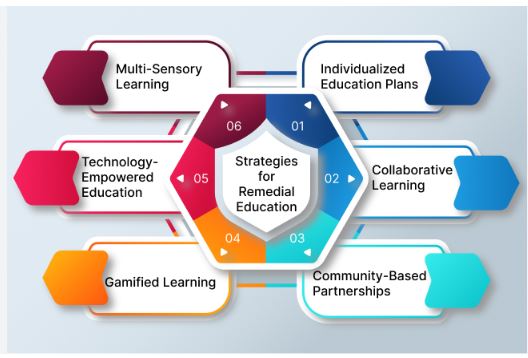
- Individualized Instruction: Modify teaching methods based on each learner’s needs.
- Use of Technology: Utilize educational apps, videos, and interactive software.
- Repetition and Reinforcement: Repeat concepts in different ways to enhance retention.
- Multisensory Learning: Combine visual, auditory, and kinesthetic techniques.
- Encouraging Social Interaction: Promote peer learning and group discussions.
- Creating a Safe Environment: Avoid criticism and build confidence.
- Frequent Assessments: Use simple, informal tests to track progress.
6. Conclusion
Slow learners can succeed with patience, targeted strategies, and an understanding learning environment. Teachers, parents, and caregivers should work together to provide customized support based on the learner’s age, grade, and specific challenges.
Would you like a more detailed explanation for a specific age group or learning challenge? 😊